
Nick Merritt, Executive Director at Wipro’s design arm, Designit
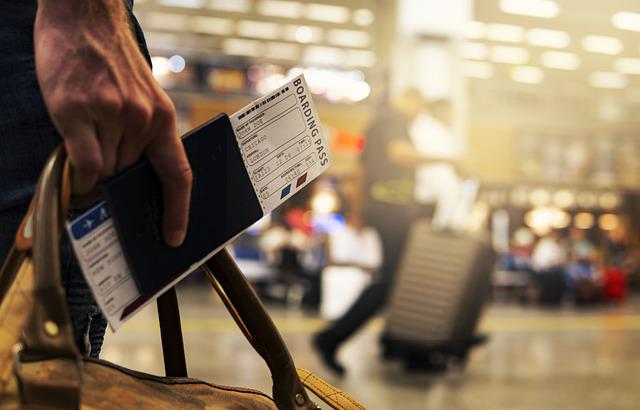
In the years following the pandemic, passport ownership increased dramatically in the US. Almost 170 million are now in circulation, according to the Department of State.
Americans are broadening their horizons. Every time a US tourist taps into the London Tube or buys a beer through contactless on Las Ramblas in Barcelona, they are being exposed to “good banking”. And they are bringing those expectations back to the States.
Experiencing faster payments and mobile-first banking abroad won’t cause Americans to demand “European-style” banking – but it will make them question why their own bank still feels slower, clunkier, and disjointed.
Banking capabilities – apps, platforms, or fraud controls – now come as standard. Differentiation is no longer determined by technology, but by the strength of relationships.
When the competition is this fierce, customer experience must be treated as a strategic discipline if US banks are to reconcile global expectations with local norms – and remind consumers why they bank with the providers they do. Doing so requires focus on three priorities.
Speed and simplicity
The first thing Americans notice when banking abroad is speed. European banking was built on infrastructure designed for digital-first experiences. For Americans, this changes the equation. US banking infrastructure still relies on legacy systems like the ACH network, which tend to process payments in batches on business days, creating delays over weekends and holidays.
Friction like this, which once felt acceptable, quickly becomes a liability once consumers have experienced faster, more intuitive systems.
But the solution is not to add more products and more channels. The key is maintaining relevance over time, achieved by reducing friction in the moments that matter. For example, instead of adding a budgeting tool, a bank could automatically flag when a customer is at risk of missing a payment, and let them resolve it in one tap.
Simplicity is key because customers are also more willing than ever to disengage quietly. Keeping the account open and continuing to transact should not be conflated with emotional buy-in. Consumers will shift their attention and trust to other providers. Retail customers now multi-bank as a default, separating spending, saving, investing, and borrowing across providers that best meet specific needs.
That makes speed and simplicity a prerequisite to staying in consideration
Make technology the enabler, not the end goal
Digital capabilities create advantage only when they meaningfully improve experience, rather than exist as features in their own right.
From a service design perspective, technology should reduce the burden placed on both customers and employees. Too often, technology has done the opposite, reinforcing broken processes at scale.
The most impactful technology will be the one that removes the most friction, not the one that attracts the most attention. Instant payments, for example, have become embedded in everyday banking in Europe. The US, meanwhile, still relies heavily on batch-based payment processing.
When technology is doing its job properly, customers don’t notice it – they simply experience a bank that is easier to deal with.
Which is why AI is not a selling point for banks in its own right. But if used correctly, it could reliably improve decisions, while removing effort from everyday customer journeys.
In a more disciplined market, the value of AI and automation will increasingly be judged on how reliably they improve real journeys – onboarding, decision-making, servicing – rather than how innovative they appear.
Familiarity and reassurance
However, US banks shouldn’t throw the baby out with the bathwater.
There is value in preserving what already works: US customers still want human support, physical touchpoints, and a sense of control over their money.
Despite growing digital expectations, a third of Americans still cite branch proximity as a deciding factor when choosing a bank. The future won’t be purely digital – it will be blended.
That could mean embedding human support more intelligently into digital journeys, rather than forcing customers to choose between channels.
The human touch is the best way to remind consumers why they’re banking with you, which is crucial.
Loyalty was once a given. Now, with multiple options easily accessible, banks cannot rely on it. Customers distribute their relationships based on speed, reliability, and ease of doing business rather than brand history.
The world has moved on
Travel is not going to transform US banking overnight. But it is already reshaping the standard by which it is judged.
As Americans experience faster, simpler, and more intuitive systems abroad, their expectations at home are quietly recalibrated. What once felt acceptable no longer does. What once differentiated is now baseline.
Therefore, in this environment, banks should focus less on adding capability and more on removing friction. Use technology to enable better experiences, not complicate them. And build a proposition that gives customers a clear reason to stay.
Because when leaving is easy, and the alternatives are global, relevance is no longer assumed. It has to be earned.

