
Nicole Olbe, Managing Director of UKI, Adyen
The most effective payment experience is the one that fades into the background. What was once a very clear step in a shopping journey has quietly evolved into something almost invisible, and certainly something that is now expected to just ‘work’. This shift is redefining how consumers, and vendors think about payments entirely.
Rather than weighing up different methods, such as cash, card or digital wallet, shoppers are measuring every transaction against the easiest experience that they’ve ever had. That expectation travels with them, raising the bar for speed, simplicity and technology that works seamlessly behind the scenes.
It’s in this context that the Financial Conduct Authority’s move to remove the UK’s £100 contactless limit makes sense. Far from prompting new behaviours, the change acknowledges a trend that has been gaining momentum for years, as payments become fully integrated in our everyday life.
Matching how people already pay
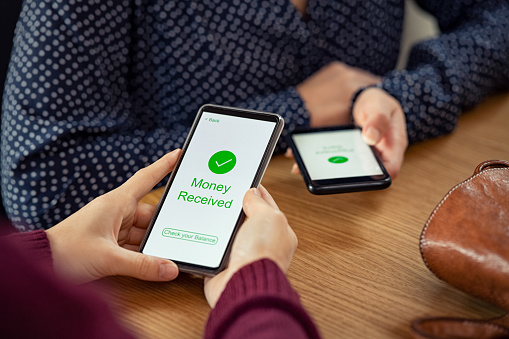
Shoppers have been comfortable making higher-value contactless payments for some time – particularly through mobile wallets. These devices have long offered more flexible limits, relying on the built-in protection of biometric ID and two-factor authentication methods to mitigate the risk of fraud. In reality, the distinction between tapping a physical card and tapping a mobile device has been breaking down for years.
Bridging the experiential gap between the two was the logical next step for the Government. Inconsistent rules across payment methods add unnecessary friction to an otherwise streamlined consumer journey. From a user’s perspective, a payment is a payment – the expectation is consistency, not complexity.
A shift businesses must make
For merchants, this change goes beyond convenience. Fixed limits can interrupt the transaction flow, particularly in busy retail environments where speed directly impacts customer conversion. In many ways, this mirrors the evolution of online shopping, where reducing friction has long been a priority, from saved payment details to one-click checkout, even the smallest delay can be the difference between completing a purchase and abandoning a basket.
The same principle applies in-store. Anyone who has had to fumble through their wallet for their physical card because a machine has asked for a PIN, whilst a busy queue builds behind them, understands how quickly frustration builds. Often, that friction is enough to cost a sale. In fact, our own research found that over a third (35%) of UK shoppers would abandon a purchase if the payment took too long.
Whilst removing the cap won’t transform the checkout experience overnight, it will help to smooth out those interruptions over time. In high-volume sectors like grocery, fuel and quick-service hospitality, that can make a huge difference, not just to the customer experience, but to overall efficiency and conversion rates.
Challenging one-size-fits-all risk models
Of course, contactless limits were never solely about convenience; they were designed to help consumers and retailers manage risk.
However, just as our payment methods have evolved, so has our approach to risk. Today, payments can be assessed in real time using far richer data: behavioural patterns, device signals and contextual insights all play a role. That allows for a more nuanced and personalised response than a blanket £100 threshold ever could.
In this new environment, a fixed limit starts to feel like a blunt instrument. Increasingly, the focus is shifting towards dynamic decision-making, approving low-risk transactions instantly, while stepping in when something doesn’t look right.
The FCA’s approach mirrors this shift. By stepping back from a universal cap and giving banks and consumers greater control, it recognises that risk is better managed through intelligent systems than rigid rules.
What comes next
The evolution of payments extends far beyond changes to contactless limits. It represents a deeper transformation across the entire payment landscape, driven by how consumers are choosing to pay in everyday situations.
Traditional distinctions between cards, digital wallets and account-to-account payments are already starting to blur. Over time, the specific method will matter less, while the quality of the experience itself will take centre stage. To meet these rising expectations, businesses will need to prioritise flexible, integrated payment infrastructures that can deliver a smooth, consistent checkout across both physical and digital environments.
Contactless will continue to play a central role in everyday, in-person transactions, but it will increasingly sit alongside a broader mix of equally seamless alternatives.
Seen through this lens, the removal of the contactless limit is more than about enabling higher-value payments. It signals a wider alignment with shifting consumer behaviours, alongside growing confidence in the technologies that support modern payments. Ultimately it reinforces a simple principle: the best payment experiences are those that feel effortless, intuitive and almost unnoticed.

