


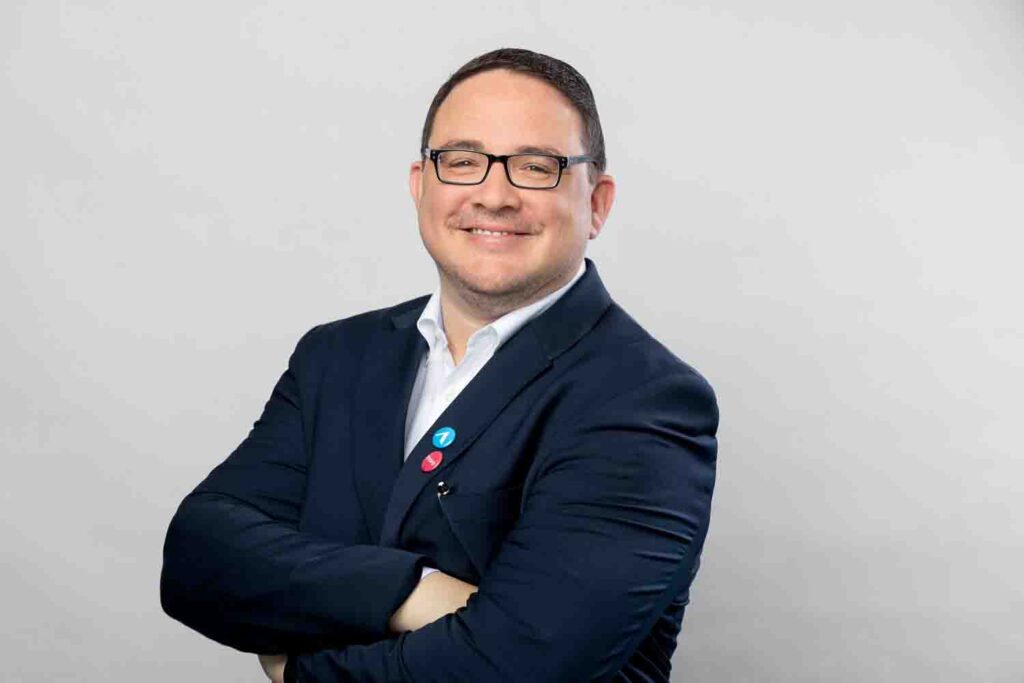
By Philipp Buschmann, co-founder and CEO, AAZZUR
When people in Europe talk about the “next chapter” of fintech, the conversation usually circles back to the same cities: London, Berlin, Amsterdam. All brilliant in their own right, but if you zoom out even slightly, you notice the centre of gravity shifting. The real action is happening in the Gulf, especially in the UAE, where the pace of regulatory reform and infrastructure building has been nothing short of intentional. This isn’t a region waiting for innovation to arrive. It’s designing the sandbox, rolling out the runway, and telling global fintech to either get on board or get left behind.
And honestly, Europe should be paying attention.
The UAE isn’t rising by accident — it’s by design
What’s happening in the UAE right now isn’t hype, and it’s not a PR exercise. It’s structural. The country has spent the last few years quietly, and now very publicly, turning itself into a fully-fledged digital finance hub. New fintech clusters are opening, financial services zones are expanding, trade-finance and digital-asset centres are being carved out, and regulators are not only present but proactive.
You can feel the shift when you visit. There’s ambition everywhere, and not the vague kind we often see at conferences; it’s ambition backed by investment, policy, and the very unglamorous but absolutely critical work of building infrastructure at speed.
The local fintech market is growing fast. Yes, the numbers matter, but the more important point is momentum. Momentum in talent, momentum in licensing clarity, momentum in government-industry collaboration. The region has decided that fintech, digital assets, and embedded finance are strategic pillars for economic growth. When a country makes that kind of decision, everything else becomes easier.
Europe should know this — we used to operate like that.
Why European fintech founders feel the pull
If you’re building fintech in Europe, you already understand regulation, complexity, compliance, fragmentation, and constant adaptation. What you may not realise is that those are the exact strengths that make you a good fit for the UAE right now.
Three things are drawing European players to the Gulf:
1. A fast-growing market where early movers still matter
While many Western markets are saturated, the Gulf is hitting its stride. Consumers are digitally literate, businesses are eager for modern financial rails, and governments are pushing for innovation rather than cautiously tolerating it. That combination doesn’t come around often.
2. Regulatory clarity that actually accelerates business
One of the biggest surprises for European founders is how fast and transparent the regulatory process can be. Free zones, centralised authorities, specialist fintech regulators — everything is being built with cross-border capability in mind. If you’ve spent years navigating fragmented European rules, this feels almost refreshing.
3. Infrastructure and capital that support real scaling
The UAE isn’t simply “welcoming fintech.” It’s building ecosystems for them: digital-asset frameworks, embedded-finance sandboxes, trade finance hubs, and financial centres that openly court global founders. There are capital, talent, and political will, three things that rarely align in one place.
This isn’t a gamble. It’s the next logical evolution for companies that have outgrown their local markets and want to operate on a bigger stage.
The UAE as a launchpad, not just a location
One thing I keep saying to founders is this: don’t think of the UAE as a satellite office. Think of it as a springboard.
Dubai and Abu Dhabi sit in a perfect geopolitical position to access regions where fintech is about to explode — the Middle East, South Asia, and parts of Africa. If you care about payments, remittances, embedded finance, digital wallets, or asset digitisation, this is where the next wave of adoption will come from.
And the UAE knows that; it’s positioning itself as the centre node in a much larger network. When countries start building multi-jurisdictional rails before the market even demands them, you know they’re not playing small.
For European fintech, the UAE isn’t just an expansion market; it’s a gateway into entire continents.
It takes a different mindset — but not a different skillset
Let’s be honest: expanding into the GCC isn’t a copy-paste of your European playbook. There are cultural nuances, regulatory differences, and a diverse demographic landscape. Consumers don’t behave the same, and businesses don’t buy the same. Partnerships work differently.
But none of this is foreign to European founders. You already operate in a landscape of fragmented regulation and demanding compliance. If anything, those muscles give you a head start. The ones who succeed here are the ones who approach it with humility, learn the ecosystem, build trust locally, and commit for the long term.
The payoff is positioning. When ecosystems are still forming, the early players influence the rules, the partnerships, the infrastructure, and ultimately the market narrative.
The UAE isn’t just a market — it’s a movement
Europe has spent years setting the tone for global fintech, but that dominance isn’t guaranteed. The UAE is offering something Europe hasn’t offered for a while: clarity, ambition, and speed.
This isn’t about chasing quick wins or capital injections. It’s about recognising that fintech is globalising, and the next decade will be shaped by regions willing to move decisively.
If European fintech wants to lead in 2030 and beyond, the smartest move may not be westward toward familiar territory.
It might be east, toward a region building the future in real time.
Philipp Buschmann, Co-Founder and CEO at AAZZUR
Philipp Buschmann is co-founder and CEO at AAZZUR, a one-stop shop for smart embedded finance experience. Recognised as a rising star in the FinTech space, AAZZUR’s mission is to build profitable banking whilst at the same time empowering consumers to have access to better informed financial choices.
Philipp is a serial entrepreneur with extensive experience working in Challenger Banking, Financial Services, IT, and Energy across the world. He took one of his business’s public – Ignis Petroleum was publicly listed in the US and Germany.
Having started as a developer in Financial Services, Philipp has first-hand experience of the banking revolution from both a technology and financial perspective. His interest in behavioural economics helped inspire AAZZUR’s revolutionary work on customer centricity in banking.
Philipp holds an MBA from the London Business School. He is passionate about entrepreneurship and loves exchanging ideas, insights, and discussing FinTech’s future. He has spoken at major Fintech events, including Money 20/20, MoneyLive, Finovate, Fintech Matters, and the Future of Retail Banking.